
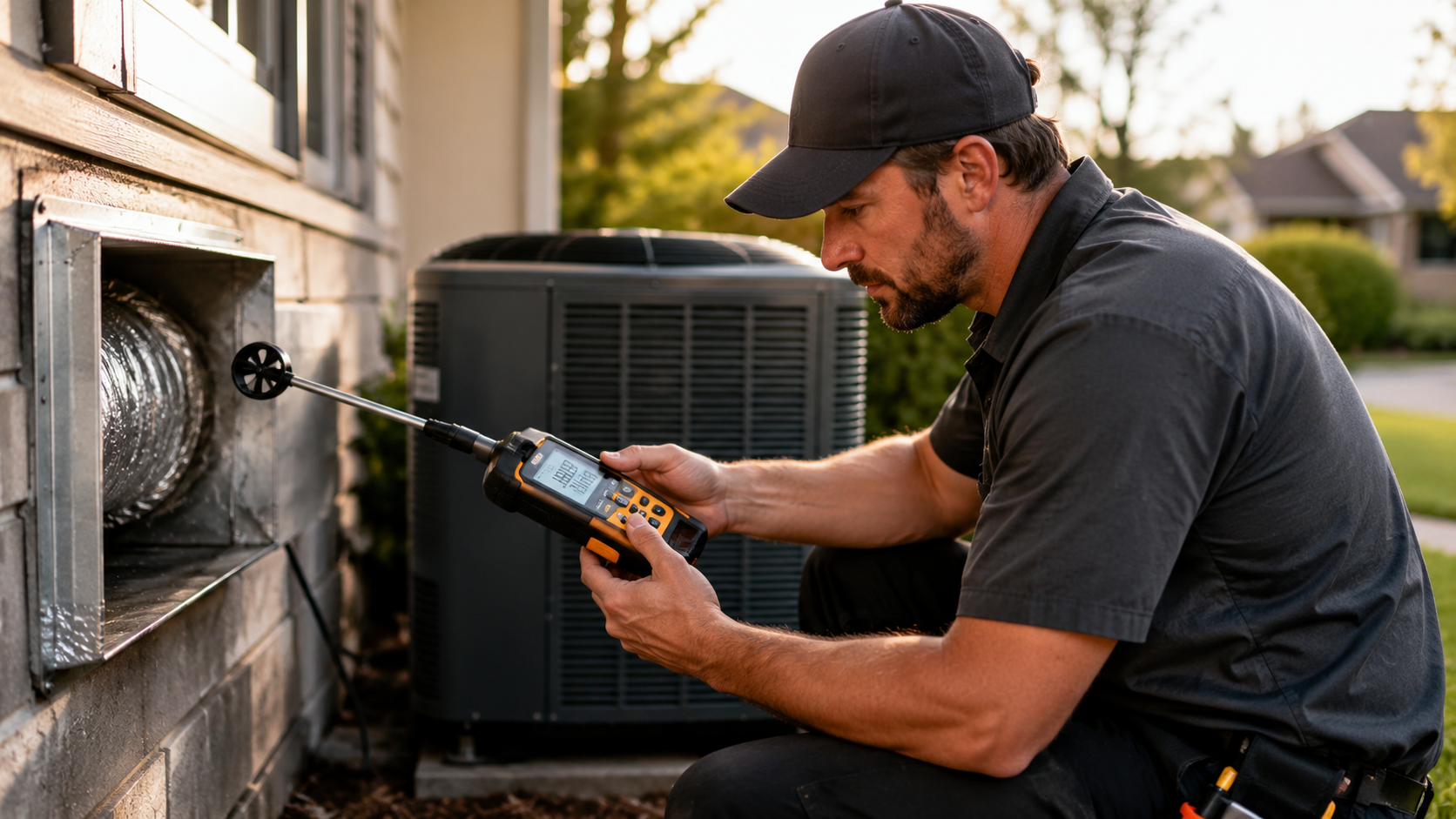
Most "bad heat pump" complaints have nothing to do with the unit itself. Here's what's actually going wrong — and how to spot it before you sign on a new system.
After 25+ years working on heating and cooling systems across the GTA, I can tell you the most common call I get isn't "my heat pump is broken." It's "my heat pump doesn't work the way I was told it would." Those are two very different problems — and in the vast majority of cases, the unit itself is the one thing that's working exactly as designed. The real issue is almost always one of three things: the wrong product for the home, an installation that skipped steps, or airflow problems that have nothing to do with the heat pump at all.
Wrong Product for the Situation
Not every heat pump is built for an Ontario winter. Standard models lose efficiency fast as temperatures drop, while cold-climate rated units are engineered to keep producing heat well below freezing. A homeowner sold a standard heat pump because it was cheaper upfront — without anyone explaining the climate-rating difference — is going to call it "weak" or "broken" the first cold snap in January. It isn't broken. It was never the right fit for where it was installed. The same goes for sizing: an oversized unit short-cycles and never properly dehumidifies, while an undersized one runs constantly and still can't keep up. Either mistake gets blamed on the equipment when it's actually a sizing and selection problem made before the unit was ever turned on.
Installation Shortcuts That Show Up Later
A heat pump is only as good as the install behind it. Refrigerant charge that's off by even a pound can quietly cut capacity and efficiency for the life of the system. A line set that's too long, has too many bends, or wasn't properly insulated creates the same effect. And a unit that goes in without real commissioning — checking static pressure, verifying airflow, confirming the charge against manufacturer specs — is essentially a guess dressed up as a finished job. None of this shows up on a quick walkthrough. It shows up six months later as "this thing just doesn't heat the house properly," and by then most homeowners assume the problem is the brand, not the install.
Airflow: The Silent Heat Pump Killer
This is the one almost nobody thinks to check. A heat pump can be perfectly sized and perfectly installed and still underperform if the ductwork around it is fighting it the whole way. Undersized return air, closed vents in unused rooms, a dirty filter restricting flow, or ducts that were never balanced in the first place — all of it forces the system to work harder for less comfort, and all of it has nothing to do with the heat pump itself. I've walked into homes where swapping the equipment was the last thing it needed; what actually fixed the comfort problem was correcting airflow that had been wrong since the day the ductwork was installed, sometimes decades earlier.
What This Means for You
If a heat pump in your home isn't performing the way you expected, the equipment is rarely the place to start looking. Before assuming you need a different brand or a bigger unit, it's worth having someone actually check the sizing math, the installation details, and the airflow through your existing ductwork. More often than not, that's where the real answer is — and it's usually a far less expensive fix than replacing a system that was never the problem to begin with.
If you're dealing with a heat pump that isn't living up to what you were promised, book a free consultation and we'll find out what's actually going on before we talk about replacing anything.